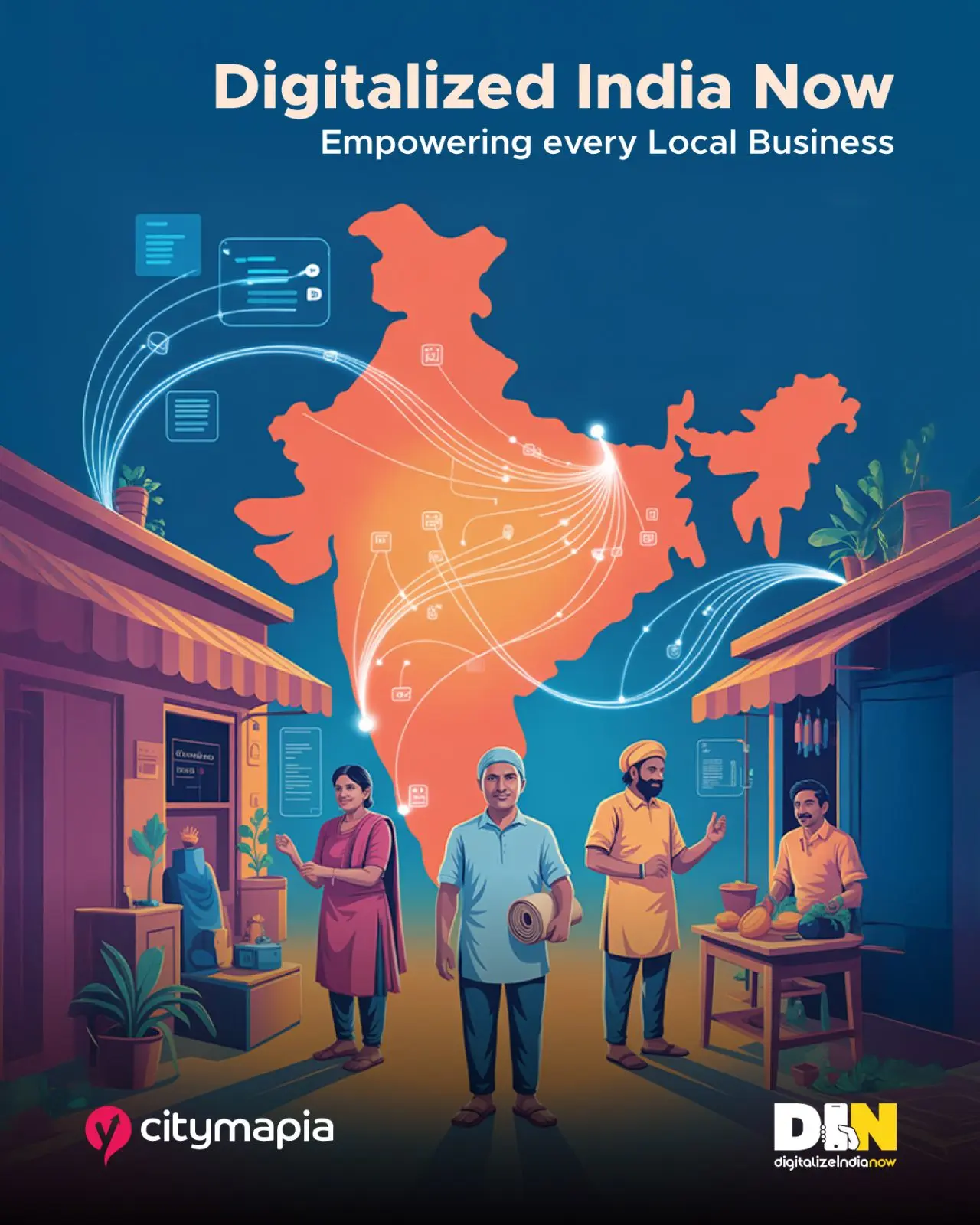
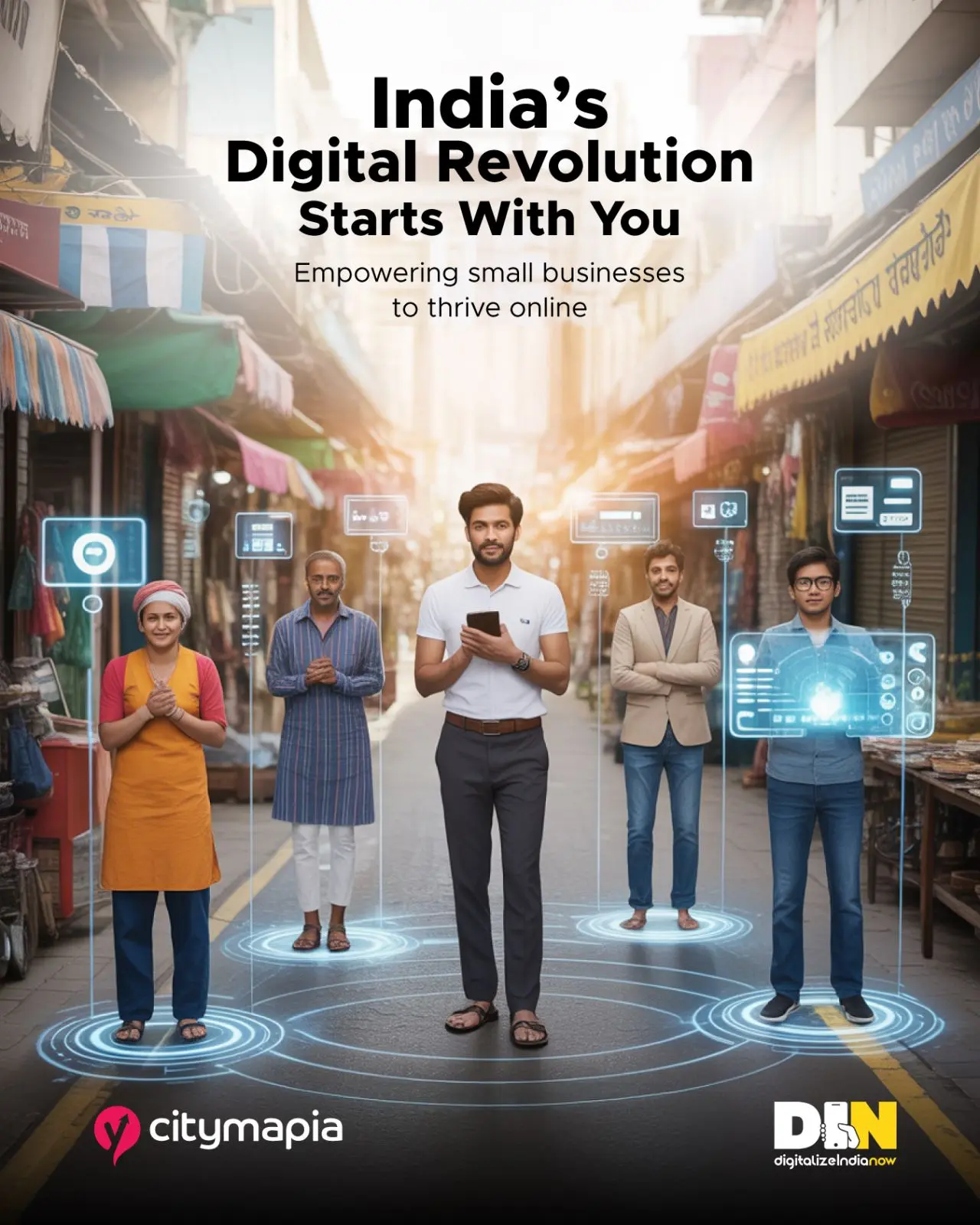
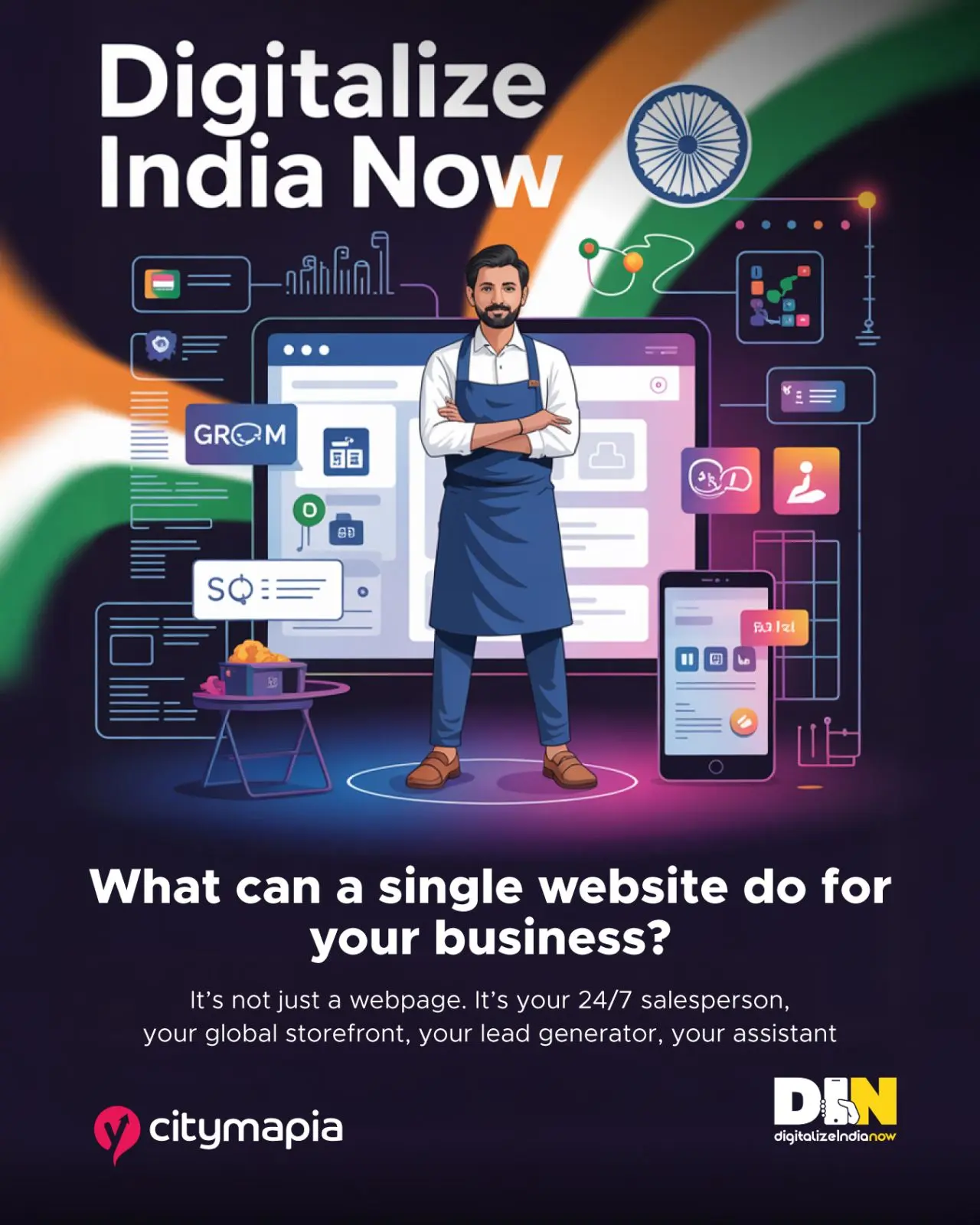
How City Digitization Is Reshaping Local Commerce
How City Digitization Is Reshaping Local Commerce
Every city is a network. The businesses, services, and opportunities inside it have always been there — but until now, most of them were invisible to the people who needed them most.
Think about how someone discovers a new restaurant, a trusted plumber, or a retail shop two neighborhoods over. They ask a friend. They scroll through a generic directory. They get lucky. That's not discovery — that's guesswork. And it's costing local businesses real customers every single day.
City digitization changes this equation entirely. It creates a living, connected map of urban commerce — one that doesn't just list businesses, but integrates them into the daily flow of city life. This article breaks down what city digitization actually means, why it matters for local economies, and how platforms like Citymapia are building the infrastructure behind it.
What City Digitization Actually Means
City digitization isn't about putting up a website or adding a Google Maps pin. It's about building a connected digital layer over the physical city — one where every business, service, and local opportunity becomes discoverable, comparable, and accessible in real time.
More than a directory
Traditional business listings are static. They tell you a name, an address, maybe a phone number. City digitization goes further — it captures the full context of what a business offers, who it serves, and how it connects to the broader urban economy.
- Real-time availability and offers
- Cross-category discovery (restaurants near retail, services near events)
- Hyperlocal relevance — what's useful within your actual radius
- Instant comparison without platform-hopping
The goal isn't to list a city. It's to make the city work for the people living in it.
The hyperlocal advantage
Hyperlocal commerce — transactions between buyers and sellers within a defined urban radius — is one of the fastest-growing segments of digital retail globally. Yet most cities still operate without the digital infrastructure to support it properly. The gap between what's available and what people can find is enormous, and it's leaving money on the table for local businesses everywhere.
- Businesses 1–25 km away remain undiscovered by potential customers
- Small operators without digital presence lose to chains that dominate search
- Users spend time on multiple platforms to find what one integrated system could surface instantly
Why Local Businesses Can't Afford to Stay Invisible
The shift toward digital-first discovery isn't coming — it's already here. Consumers expect to find, compare, and connect with local businesses the same way they shop online: quickly, confidently, and from wherever they are.
Businesses that aren't part of a connected urban digital ecosystem face a compounding disadvantage. Each day without visibility is a day their competitors — often larger chains with dedicated digital marketing budgets — capture the attention that should have been theirs.
- Brand awareness stays low even when product quality is high
- Repeat customers are harder to retain without a digital touchpoint
- Word-of-mouth alone doesn't scale in dense urban environments
- New residents and visitors can't discover what they don't know exists
Visibility isn't a luxury for local businesses anymore. It's the baseline for survival in a digitized city.
How Citymapia Builds the Digital Core
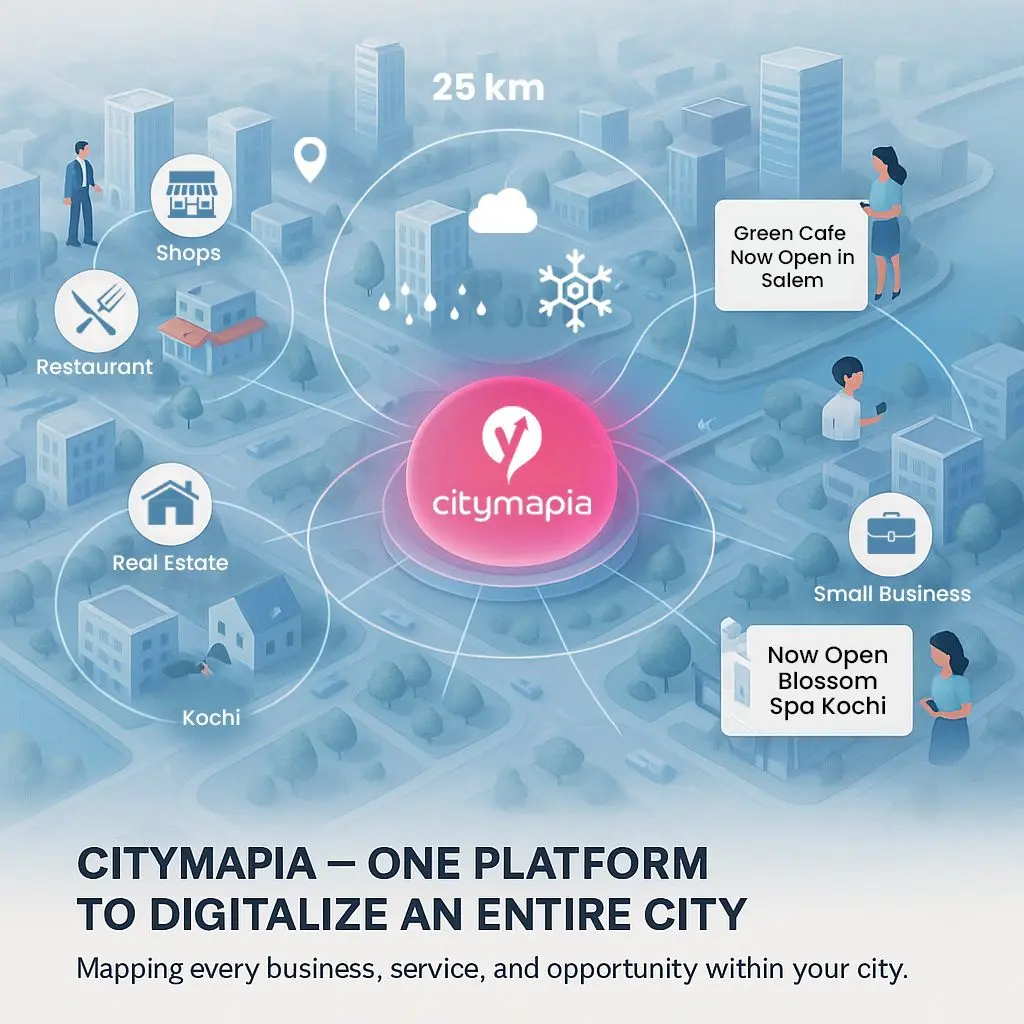
Citymapia is built around one clear mission: map every business, service, and opportunity within a city into a single, intelligent digital ecosystem. Not just a list — an integrated layer that connects local commerce the way the internet connected global commerce.
The Citymapia Core covers the full breadth of urban economic life — from restaurants and retail shops to real estate, professional services, and small businesses that have never had a meaningful digital presence. The platform is designed to let users discover, compare, and connect instantly, whether they're 1 km or 25 km from what they're looking for.
- Unified discovery across all business categories
- Intelligent search that understands proximity and intent
- Infrastructure that supports local commerce at city scale
- A platform that grows with the city, not against it
Common Mistakes to Avoid
- Treating a Google Maps listing as a digital strategy — A pin on a map is a starting point, not a presence. It doesn't help users compare, convert, or connect with your business in any meaningful way.
- Waiting until you "have enough time" to go digital — Every week without digital visibility is market share quietly shifting to competitors who are already there.
- Assuming city-scale platforms are only for large businesses — Hyperlocal platforms are specifically designed to level the playing field. Small operators often benefit most from integrated discovery systems.
- Fragmenting your presence across too many unconnected platforms — Being on five platforms inconsistently is less effective than being deeply present on one that integrates your full offering.
Frequently Asked Questions
What is city digitization and how does it differ from regular digital marketing?
City digitization refers to building the underlying infrastructure that makes an entire urban economy discoverable and connectable — not just promoting individual businesses through ads or social media. It's structural, not promotional.
Why is hyperlocal discovery important for small businesses?
Small businesses rely on local foot traffic and word-of-mouth, both of which are increasingly digital. Hyperlocal platforms put them in front of nearby customers who are actively looking — without the ad spend that large chains can afford.
How does an integrated city platform differ from a standard business directory?
A directory lists businesses. An integrated city platform connects them — to each other, to users, to real-time signals like availability and proximity. The experience is active and intelligent, not static and alphabetical.
Can a city platform work for both consumers and businesses at the same time?
Yes — and that dual value is exactly what makes them work. Consumers get faster, smarter local discovery. Businesses get organic visibility, real customer connections, and the kind of presence that used to require a significant marketing budget.
What types of businesses benefit most from city digitization platforms?
Any business that depends on local customers — restaurants, retail, real estate, service providers, and small independent operators — benefits. The businesses that gain the most are typically those with strong offerings but limited digital infrastructure of their own.
Map your business to the city it serves.
Join the digital layer that's connecting local commerce across every neighborhood.
Explore Citymapia