Temple Websites: How Citymapia Digitized Kerala Heritage
Temple Websites: How Citymapia Digitized Kerala Heritage
Thousands of devotees worldwide seek darshan, festival schedules, and pooja bookings — yet most temple websites still look like they were built in 2005. That gap is exactly where digital transformation creates real impact.
Heritage temples carry centuries of tradition. But their digital presence rarely reflects that depth — outdated layouts, no online booking, no multilingual support. The result? Devotees struggle, temples miss engagement, and the connection between community and culture gets quietly eroded.
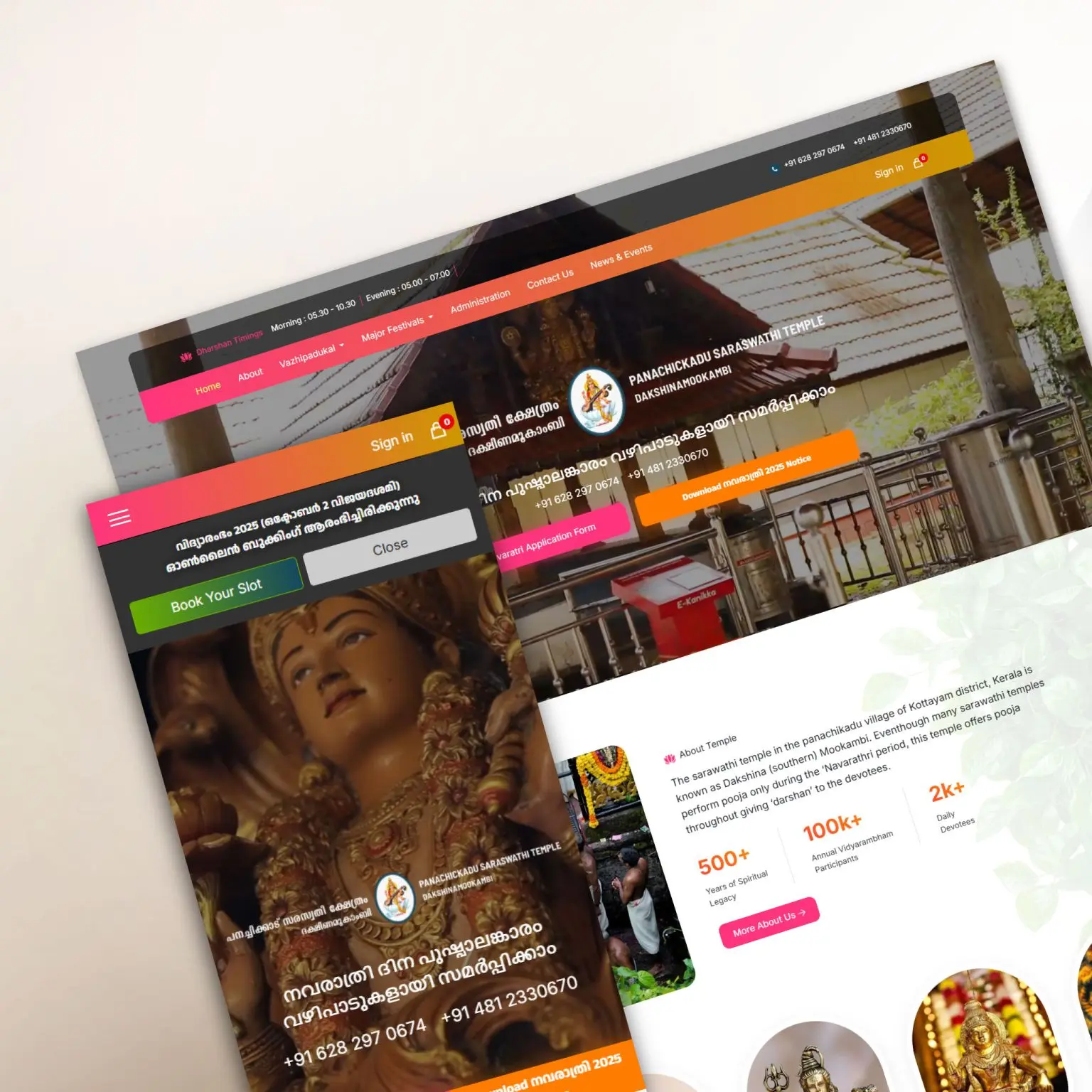
When the Panachikkadu Saraswathi Temple — revered across Kerala as Dakshina Mookambika — partnered with Citymapia, the goal wasn't just a new website. It was a fully functional digital temple that honors tradition while meeting modern devotees where they are.
Why Temple Websites Fail
Most religious organizations approach their website as a brochure — static pages listing temple timings and contact numbers. That approach misses the actual needs of a devotee planning a visit from another state, or a diaspora family seeking online pooja booking from abroad.
The Core Gaps in Most Temple Platforms
These aren't minor UX issues. They're barriers that disconnect devotees from the institution entirely.
- No online darshan slot or pooja registration system
- Missing multilingual support for Malayalam, English, and Hindi-speaking devotees
- Poor mobile experience despite most users accessing via phone
- No integration for donations or event-based forms
- Festival announcements buried or absent entirely
A temple website isn't just an information board — it's the first act of seva for a devotee who can't physically be there.
What Citymapia Built for Panachikkadu Temple
The Panachikkadu Saraswathi Temple project required something specific: a platform that could handle the operational complexity of a major pilgrimage site without losing the spiritual aesthetic that defines the space.
Citymapia designed and developed the platform with both the temple administration and the devotee in mind — not just one of them.
Key Features Delivered
- Online Pooja Booking and Darshan Slot System — real-time booking that eliminates queuing uncertainty for devotees planning visits from across India and abroad.
- Navaratri Registration with Downloadable Forms — built to handle one of the temple's highest-traffic festival periods without performance issues.
- Temple History and Festival Highlights Section — preserving cultural depth within a modern, accessible layout.
- Mobile-Optimized UI/UX — fully responsive design that works across all device sizes, prioritizing the smartphone experience.
- Integrated Contact and Enquiry Modules — reducing admin burden through structured inbound communication.
The result is a digital platform connecting thousands of devotees daily — while maintaining every ounce of the temple's sanctity and cultural identity.
What Digital Transformation Means for Heritage Institutions
Heritage institutions face a unique tension: stay deeply rooted in tradition while becoming accessible to the world. The Panachikkadu project demonstrates that both are entirely achievable — but only if the platform is built around the institution's actual context, not a generic template.
- A responsive design means diaspora communities in the UK, US, and Gulf can access services without barriers
- Online registration reduces footfall pressure during peak festivals like Navaratri
- Structured content sections on temple history build trust and deepen connection before a devotee even arrives
- Clean navigation removes the friction that causes users to abandon the site entirely
Common Mistakes to Avoid
- Treating the website as a one-time project — temple websites need ongoing updates for festivals, events, and announcements or they quickly lose devotee trust.
- Ignoring multilingual requirements — temples serving regional devotees need content in native languages, not just English-only pages.
- Skipping mobile-first design — the majority of temple website traffic comes from smartphones; a desktop-priority build fails most of your audience immediately.
- Separating design from devotee experience — aesthetics and functionality must serve the spiritual purpose of the platform, not just look impressive in a portfolio.
Frequently Asked Questions
Can a temple website handle high-traffic festivals like Navaratri?
Yes — if it's built with scalable infrastructure from the start. The Panachikkadu platform includes a dedicated Navaratri registration flow with downloadable forms, designed specifically to handle the surge in devotee activity during peak festival periods without performance issues.
How does online pooja booking work for devotees outside Kerala?
Devotees anywhere in the world can access the portal, choose their preferred pooja or darshan slot, and complete registration online. This is particularly valuable for the temple's large diaspora following in the Gulf and other countries who plan visits months in advance.
Will a new website disrupt the temple's existing operations?
Not when it's built correctly. Citymapia's approach integrates the platform into existing temple workflows — the administration gains a more organized system while devotees get a better experience. No operational overhaul required.
Does Citymapia only work with large or well-known temples?
No. The same principles that made the Panachikkadu project successful — thoughtful UX, community-centered design, and scalable infrastructure — apply to institutions of any size. The scope adapts, but the quality doesn't.
Ready to Build a Digital Presence That Honors Your Institution?
Citymapia builds platforms that connect communities — without losing what makes them sacred.
Explore Citymapia