Enfield Royal Clinic Oman

 Home
Home  About Enfield Royal Clinic Oman
  Treatments
  Make An Enquiry





Exosomes Treatment Results: What Experts Recommend
Posted On Apr 28, 2026Discover Exosomes Treatment, a regenerative therapy that supports healing, skin rejuvenation, and cellular repair for improved overall wellness for health.
Exosomes treatment has quickly become one of the most talked-about advancements in regenerative and aesthetic medicine. Many people exploring Exosomes Treatment in Oman are curious about what results to expect, how effective it is, and what medical experts actually recommend.
While the science is still evolving, early clinical findings and dermatology insights suggest promising improvements in skin rejuvenation, hair restoration, and healing support. However, specialists also emphasize realistic expectations and proper medical guidance.
Below is a detailed, expert-style overview of exosomes treatment results, benefits, limitations, and frequently asked questions.
Understanding Exosomes Treatment and How It Works
Exosomes are tiny extracellular vesicles released by cells that help with cell-to-cell communication. In medical aesthetics, they are usually derived from stem cells and used to support skin and tissue regeneration.
Instead of directly altering the skin like lasers or fillers, exosomes act as “messenger particles” that signal the body to repair, rebuild, and regenerate.
Experts often combine exosomes with procedures like microneedling or laser treatments to enhance absorption and improve overall results.
Research suggests that exosomes may help improve collagen production, reduce inflammation, and accelerate healing responses in skin tissues. However, specialists emphasize that this is still an emerging field and more large-scale studies are needed for confirmation.
Exosomes Treatment Results for Skin Rejuvenation
One of the most popular uses of exosomes therapy is skin rejuvenation, especially for concerns like aging, dull skin, pigmentation, and uneven texture.
Commonly Reported Skin Improvements:
- Smoother and more refined skin texture
- Reduced appearance of fine lines
- Improved hydration and elasticity
- Brighter and more even skin tone
- Mild reduction in pigmentation issues
Clinical reviews have shown early improvements in scar appearance, skin elasticity, and pigmentation reduction in some patients, though results vary depending on individual conditions and treatment protocols.
Experts generally note that results are gradual, often appearing within a few weeks, and continue improving over time as collagen remodeling occurs.
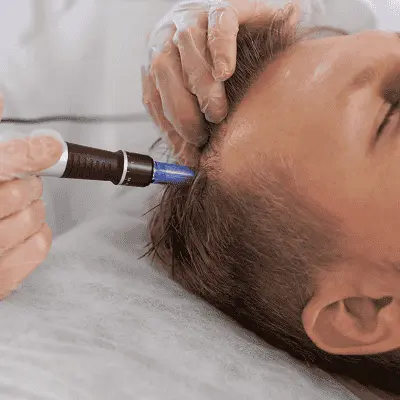
Exosomes Treatment Results for Hair Regrowth
Another growing application is hair restoration, especially for conditions like thinning hair and early-stage hair loss.
Observed Benefits in Studies and Clinical Use:
- Increased hair density in some patients
- Improved hair thickness
- Better scalp health and reduced inflammation
- Enhanced follicle activity in early-stage hair loss
Some early clinical studies show improvements in hair density and thickness, particularly when exosomes are derived from mesenchymal stem cells. However, researchers also highlight that evidence is still limited and not yet standardized.
Experts often recommend exosomes as a supportive therapy rather than a standalone cure for hair loss.
What Experts Recommend Before Choosing Exosomes Treatment in Oman
Medical professionals generally advise patients to approach exosomes therapy with informed expectations.
Expert Recommendations Include:
1. Choose Proper Medical Evaluation First
A consultation is essential to determine whether exosomes therapy is suitable for the individual’s skin or hair condition.
2. Understand That Results Vary
Not everyone experiences the same level of improvement. Factors like age, skin condition, and treatment combination matter significantly.
3. Combine with Other Treatments When Needed
Exosomes are often more effective when paired with:
- Microneedling
- Laser resurfacing
- PRP (platelet-rich plasma)
- Medical-grade skincare
4. Be Patient with Results
Unlike instant cosmetic procedures, exosomes work gradually by stimulating biological repair mechanisms.
Experts also highlight that although early results are promising, the treatment is still under research and should not be considered a guaranteed or permanent solution.
Safety and Limitations of Exosomes Therapy
While exosomes are generally considered safe in controlled clinical settings, experts emphasize several important limitations.
Key Points:
- Long-term effects are still being studied
- Product quality and sourcing vary widely
- Not all exosome products are clinically standardized
- Results may be temporary without maintenance sessions
Some dermatology reviews also caution that many commercial claims are ahead of scientific validation, and more research is needed before widespread medical approval.
Who Can Benefit from Exosomes Treatment in Oman?
Exosomes therapy may be suitable for individuals who want to improve:
- Early signs of aging
- Mild to moderate skin damage
- Acne scars or uneven texture
- Hair thinning or weak hair density
- Post-procedure skin healing (after lasers or microneedling)
However, it is not typically recommended as a first-line treatment for severe medical conditions or advanced hair loss.
Expected Timeline of Results
Experts generally describe the results timeline as gradual:
- First 1–2 weeks: Mild improvement in hydration and glow
- 3–6 weeks: Visible texture and tone improvement
- 6–12 weeks: Collagen remodeling and more noticeable changes
- Maintenance phase: Periodic treatments may be needed
Results depend heavily on the individual’s biological response and treatment combination.
FAQs About Exosomes Treatment
1. Are exosomes treatment results permanent?
No, results are not permanent. Maintenance sessions may be needed as the skin continues to age naturally.
2. How soon can results be seen?
Some improvements may appear within 1–2 weeks, but full results usually take 4–12 weeks.
3. Is exosomes treatment safe?
It is generally considered safe in clinical environments, but long-term safety data is still being studied.
4. Can exosomes treat hair loss completely?
No, it may improve hair density and thickness in some cases, but it is not a guaranteed cure for all types of hair loss.
5. Is exosomes treatment better than PRP?
Both treatments have different mechanisms. Some early studies suggest exosomes may offer stronger regenerative signaling, but evidence is still limited.
6. Does exosomes treatment work for all skin types?
Most skin types can benefit, but results vary depending on age, condition severity, and overall skin health.
Final Thoughts
Exosomes treatment represents an exciting step forward in regenerative aesthetics, especially for people seeking natural-looking improvements in skin and hair health. In places like Oman, interest in this therapy is growing due to its potential for subtle, gradual, and regenerative results.
However, experts consistently recommend realistic expectations. While early studies show promising outcomes in skin rejuvenation and hair support, the treatment is still developing and not yet fully standardized.
For those considering it, the best approach is informed decision-making, proper consultation, and combining it with evidence-based skincare or medical treatments when appropriate.
Read More About Exosomes Treatment: https://www.citymapia.com/muscat/enfield-royal-clinic-oman/blog/exosomes-treatment-reviews-25200



;)