Comtech Systems

 Home
Home  About Comtech Systems
  service
  Make An Enquiry





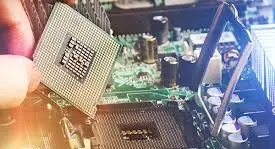
Types of Processors
Posted On Nov 26, 2021Processors are accessible in a different scope of plans.
The CPU, usually known as the PC's mind, is the most essential part of a PC framework.
It plays out every single numerical calculation and makes generally consistent decisions to control different PC processes. Profoundly and multi-center processors were the two principle kinds of processors.
These processors were mainly classified as Single core and Multicore.
The oldest type of CPU is Single core and that is the oldest CPU. That will execute one command at a time only. Not efficient for multi-tasking. It works on FIFO (First Come First Serve) orders. When it performs multiple operations results in poor performance. Performance is mainly based on clock speed.
*Dual-core processors
*Caches and controllers are merged onto one chip
*Two processors are coupled together in a single IC
*Ability to complete a variety of tasks swiftly.
*Multitasking ability
In this case, each processor handles each activity individually, so if you want to listen to music and work at the same time, each core handles each task separately.
*Quad-core processors
*High power CPU
*Four processors combined into one processor.
*Able to execute massive instructions at the same time.
*Enhance the processing power of computers.
*Capable of executing multiple tasks.
*Hexa core processors
*Multi-core processor with 6 cores
*Perform faster than Dual and Quad-core processors
Intel launched i7- Hexa Core in 2010
*Octa-core processors
*Developed with 8 independent cores
*More efficient and rapid than quad-core and hexacore processors
*Composed of a dual set of a quad-core processor.
*Ability to perform multitasking and to boost up the efficiency of your CPU.
*Mostly used in smartphones








;)