Enfield Royal Clinic Oman

 Home
Home  About Enfield Royal Clinic Oman
  Treatments
  Make An Enquiry





How Dermatologists Diagnose Common Skin Conditions
Posted On Jan 2, 2026Find expert dermatologists for acne, eczema, skin cancer screening, and cosmetic treatments. Book an appointment today.
Healthy skin is a reflection of overall well-being, but skin problems are common and can range from minor irritations to serious medical conditions. Residents in Oman who experience persistent rashes, acne, or unusual growths often turn to dermatologists for expert diagnosis. Understanding how Dermatologists in Oman assess and diagnose skin conditions can help patients seek timely care and receive effective treatment.
Understanding the Role of Dermatologists
Dermatologists are medical professionals specializing in the diagnosis and treatment of skin, hair, and nail conditions. They are trained to identify a wide variety of issues, from acne and eczema to infections, allergic reactions, and potentially life-threatening conditions like skin cancer.
When patients consult a dermatologist, the goal is to accurately identify the problem, determine its cause, and recommend a suitable treatment plan. This involves a combination of visual assessment, patient history, and diagnostic tests.
Initial Consultation and Patient History
The first step in diagnosing a skin condition is a detailed consultation. Dermatologists in Oman emphasize the importance of gathering information about the patient’s medical history, lifestyle, and symptoms. Key questions often include:
When did the skin issue first appear?
Are there any triggers or factors that worsen the condition?
Have any treatments or remedies been tried before?
Is there a family history of similar skin problems?
This information helps dermatologists narrow down potential causes and develop a targeted approach for examination.
Visual Examination and Skin Assessment
After the consultation, a thorough visual examination is conducted. Dermatologists look for characteristic signs such as:
Rashes and lesions: Their shape, color, size, and location provide important diagnostic clues.
Scaling or flaking: May indicate conditions like psoriasis or fungal infections.
Redness or inflammation: Could suggest allergic reactions, eczema, or infections.
Growths or moles: Changes in shape, color, or size may require further investigation to rule out skin cancer.
Dermatologists also assess the distribution and pattern of skin changes, as these details can help distinguish between similar-looking conditions.
Diagnostic Tests and Tools
While many skin conditions can be diagnosed through visual examination, some require additional tests to confirm the diagnosis. Common diagnostic tools used by dermatologists include:
Skin Biopsy
A small sample of skin may be taken and analyzed in a laboratory to confirm conditions such as psoriasis, dermatitis, or skin cancer. Biopsies are minimally invasive and provide highly accurate results.
Patch Testing
For patients experiencing allergic reactions or contact dermatitis, patch testing helps identify specific allergens that may trigger irritation. Small patches containing potential allergens are applied to the skin, and reactions are observed over several days.
Blood Tests
Certain skin conditions, such as autoimmune disorders or infections, may require blood tests to identify underlying causes. Dermatologists use these results to guide treatment plans.
Dermoscopy
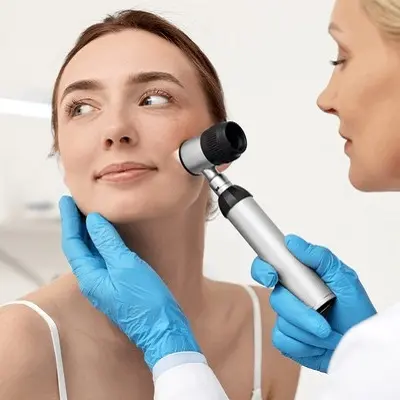
Dermoscopy is a non-invasive technique using a handheld device to magnify and illuminate the skin, allowing dermatologists to examine moles, growths, and other lesions in detail. This tool helps detect abnormalities early, particularly in cases of suspicious moles or pigmented lesions.
Wood’s Lamp Examination
A Wood’s lamp emits ultraviolet light that highlights bacterial or fungal infections, pigmentary changes, and other skin irregularities. This test is often used to diagnose conditions like vitiligo or certain fungal infections.
Common Skin Conditions and How They Are Diagnosed
Dermatologists in Oman frequently encounter a range of skin conditions. Some of the most common include:
Acne: Characterized by pimples, blackheads, and whiteheads. Diagnosis involves visual examination and assessment of severity.
Eczema (Atopic Dermatitis): Presents with dry, itchy, and inflamed patches of skin. Dermatologists evaluate triggers and may perform patch testing.
Psoriasis: Identified by thick, scaly plaques, often on the elbows, knees, and scalp. Diagnosis can be confirmed with a skin biopsy.
Fungal Infections: Appear as red, itchy, or ring-shaped patches. Diagnosis may include Wood’s lamp examination or microscopic analysis of skin scrapings.
Skin Cancer: Suspicious moles or lesions are assessed using dermoscopy and biopsy to confirm the presence of malignant cells.
Rosacea: Chronic redness and visible blood vessels on the face are assessed through visual examination and patient history.
Patient Education and Follow-Up
After diagnosing a condition, dermatologists prioritize patient education. Understanding the cause, triggers, and management strategies is key to successful treatment. Dermatologists provide guidance on:
Skincare routines tailored to the condition
Avoiding triggers that worsen symptoms
Medication usage, including topical or oral treatments
Lifestyle adjustments, such as diet, stress management, or sun protection
Follow-up visits are often scheduled to monitor progress, adjust treatment plans, and ensure the skin condition is improving as expected.
FAQs About Dermatology Diagnosis
1. How long does it take to diagnose a skin condition?
Most common skin issues can be diagnosed during an initial consultation. However, conditions requiring biopsy or lab tests may take several days for confirmation.
2. Are skin biopsies painful?
Biopsies are minimally invasive and performed under local anesthesia. Most patients experience only mild discomfort.
3. Can dermatologists diagnose skin conditions without tests?
Yes, many conditions like acne, eczema, and psoriasis can be diagnosed through visual examination and patient history alone. Tests are used when the diagnosis is uncertain or requires confirmation.
4. How often should I see a dermatologist for chronic skin conditions?
Patients with chronic conditions like psoriasis or eczema should follow their dermatologist’s recommended schedule, typically every few months or as needed for flare-ups.
5. Are all skin rashes serious?
Most rashes are mild and manageable, but persistent, spreading, or unusual rashes should be evaluated by a dermatologist to rule out infections or underlying diseases.
6. Can lifestyle changes affect skin health?
Absolutely. Hydration, diet, stress management, and sun protection play an important role in preventing and managing many skin conditions.
Conclusion
Diagnosing skin conditions requires expertise, careful observation, and sometimes additional testing. Dermatologists in Oman combine patient history, visual examination, and diagnostic tools to accurately identify and treat a wide range of skin issues. Early consultation not only ensures proper management but also prevents complications, particularly in conditions like skin cancer or severe eczema. By understanding how dermatologists approach diagnosis, patients can feel informed, confident, and proactive in maintaining healthy skin.








;)