Comtech Systems

 Home
Home  About Comtech Systems
  service
  Make An Enquiry





IBM reveals open-source programmes to improve space access
Posted On Oct 2, 2020Connection to Earth's orbit was once confined to a number of space agencies around the world. Low-Earth orbit (LEO), the sliver of space stretching to 1,200 miles above our world, is now an increasingly populated combination of private and public interests with the explosion of spacefaring infrastructure and cost-efficient craft.
To learn more about these projects, we talked to Naeem Altaf, IBM Distinguished Engineer and Space Engineering CTO. Constructing more sophisticated detection systems for space debris .A vast debris field filled with millions of objects ranging from untrackably tiny leftovers from previous rockets to school bus-sized objects has collected across Earth since the launch of Sputnik more than 60 years ago.
At nearly 18,000 mph, these objects whirl overhead. One of the new open-source updates from IBM is focused on developing more sophisticated detection technologies for space debris.
Today, various governments across the globe use monitoring devices to monitor space debris in orbit, however, according to Altaf, the precise positions of different objects can change depending on the agency you are referring to.
This will present myriad protection and technological problems, as one would expect.
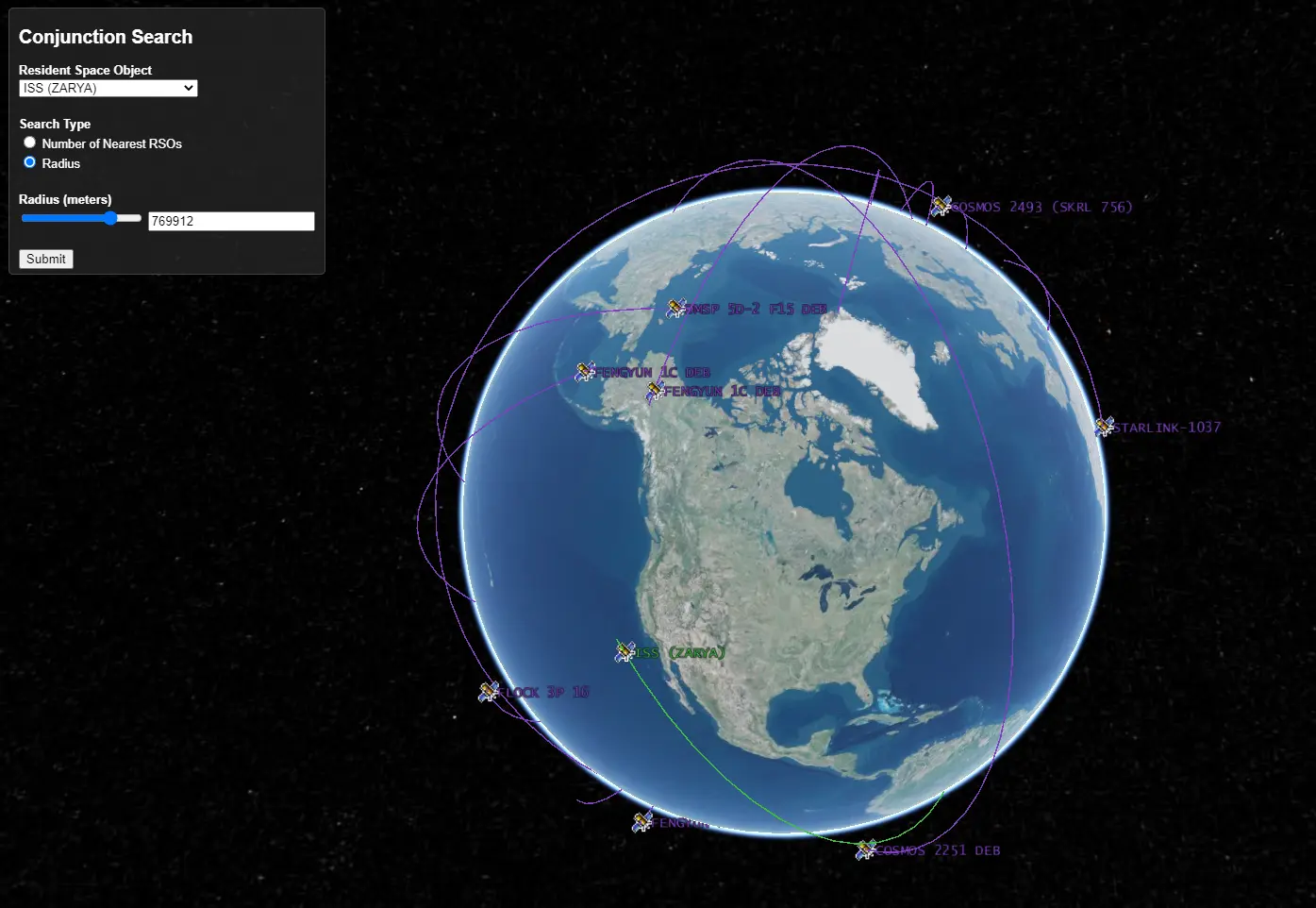
IBM has developed the Space Situational Awareness (SSA) project in conjunction with the University
of Texas at Austin, which uses two models to track space debris and help.
Cowell's formulation integrates the physics-based SSA model to
predict "perturbation" space debris orbit "caused by the Earth."
A second model utilizes machine learning to forecast errors using
XG Boost gradient-boosted regression trees in orbit predictions, per the IBM release.
Satellite swarms and "As an operation, CubeSats"
The second open-source IBM initiative is intended to facilitate greater access to "satellite swarms." As part of a broader group goal, these swarms are basically a variety of satellites working in tandem. In recent years, as opposed to much larger conventional satellites, more companies are starting to use smaller CubeSats.
Altaf parallels the transformation with advances in the production of terrestrial applications.
We used to create this big, big monolithic infrastructure. So came the idea of microservices. So I can split it into 10 separate modules instead of making this big monolithic system, and I
can have some little systems that are autonomous, loosely related, and they can do their stuff, right? I can start building this one project instead of investing so much money [and] time. Altaf said.
The Kubesat open-source project by IBM provides a computational, autonomous satellite system
that enables, according to the organization, "simulation and optimization of multi-satellite communications."
According to IBM, satellite swarm communication and mutual collaboration may work
separately, allowing a swarm to cooperate or split based on the target.
"In the swarm, you are essentially creating a functional cluster on the fly. And so the the function goes and executes and after the case is over, they all go back to their
state, separate state, where they can be accessible for some other job or task to be provided. So, [it's] kind of like a dispersed job of computation and batch processing," Altaf said.
Swarms may be labeled for a host of applications and customers, based on the on-board sensors and
capacities, ranging from meteorological monitoring to deforestation, according to Altaf, compared the term to "CubeSats as a facility." It becomes a multitenant system in which different jobs are applied by
multiple organizations, so that different requirements can ultimately be fulfilled, "Altaf said."








;)