TKM Institute of Technology

Kollam, Kerala
 Home
Home  About TKM Institute of Technology
  Academic Courses
  Make An Enquiry





Copyright © 2026 Citymapia.com. All Rights Reserved
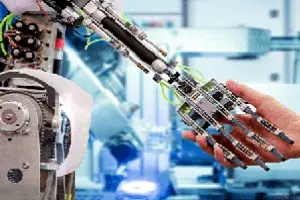
Biomedical Engineering
Posted on 29 May 2024The Department of Electronics and Biomedical Engineering, established in 2007, initially offered a UG program with 60 students under Cochin University of Science and Technology. Since 2015, it has been affiliated with KTU, continuing as a BTech in Biomedical Engineering. This field aims to improve human health by applying engineering principles to healthcare, focusing on medical equipment design, development, and problem-solving. The department boasts highly qualified faculty and motivated students who collaborate extensively. It enhances student knowledge and ethics through conferences, seminars, and workshops, and offers practical training via well-equipped laboratories and implant training. The department maintains strong academic performance, student growth, and professional excellence.
Opportunities in Biomedical Engineering
Biomedical engineers play a crucial role in analyzing and designing solutions for problems in biology and medicine, aiming to enhance the quality and effectiveness of patient care.Employment in this field is projected to grow by 27 percent from 2012 to 2022, a rate much faster than the average for all occupations. This growth is driven by an aging population requiring increased medical care and rising public awareness of biomedical engineering advancements and their benefits.Graduating with a major in biomedical engineering opens the door to a wealth of job opportunities, combining the fields of medicine and engineering to improve the quality of life globally.
Typical Responsibilities of Biomedical Engineers:
Design systems and products such as artificial internal organs, prosthetic devices, and diagnostic machines
Install, adjust, maintain, repair, or provide technical support for biomedical equipment
Evaluate the safety, efficiency, and effectiveness of biomedical equipment
Train clinicians and other personnel on the proper use of equipment
Collaborate with life scientists, chemists, and medical scientists to research the engineering aspects of biological systems in humans and animals
Biomedical engineers may also:
Design instruments, devices, and software
Integrate knowledge from various technical sources to develop new procedures
Conduct research to solve clinical problems
Biomedical engineers often coordinate efforts by leveraging their expertise in both engineering and medicine. For instance, in the industry, they might create products requiring an in-depth understanding of both living systems and technology. They frequently work in research and development or quality assurance.Biomedical engineers design electronic circuits, software for medical equipment, and computer simulations for testing new drug therapies. They also build artificial body parts, such as hip and knee joints, and sometimes develop the materials for these replacements. Additionally, they design rehabilitative exercise equipment.
The work of biomedical engineers spans various professional fields. While their expertise is rooted in engineering and biology, they often design computer software for complex instruments, such as three-dimensional x-ray machines.








;)