Enfield Royal Clinic Oman

 Home
Home  About Enfield Royal Clinic Oman
  Treatments
  Make An Enquiry





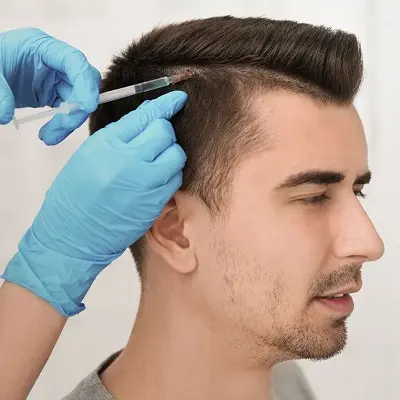
Do Hair Transplants Look Good on Curly Hair Types?
Posted On Sep 22, 2025Restore your hair and confidence with advanced hair transplant solutions. Natural results, safe procedures, and lasting growth tailored to you.
Curly hair has a unique charm, adding volume, texture, and personality to one’s appearance. However, hair loss can affect individuals with curly hair just as it does those with straight hair. This often raises a common question: Do hair transplants look good on curly hair types? Fortunately, with the right techniques and expertise, hair transplants can be highly effective for curly hair, providing natural-looking results. For those exploring solutions, understanding how these procedures work for textured hair is essential. This article explores the effectiveness of hair transplants for curly hair and why choosing a specialized Hair Transplant in Oman can make a difference.
Understanding Curly Hair and Hair Transplants
Curly hair is unique because the hair follicles are curved beneath the scalp. This natural curl affects how hair grows and how it can be transplanted. Unlike straight hair, curly hair tends to appear denser even when fewer follicles are present due to its volume and bounce.
Hair transplants involve moving healthy hair follicles from donor areas, typically the back or sides of the scalp, to areas experiencing thinning or baldness. For curly hair, special attention is needed during the procedure because:
Curl Pattern: Each follicle has a natural curve that must be carefully aligned when transplanted to maintain a natural appearance.
Density Considerations: Curly hair can provide excellent coverage with fewer follicles, but achieving a seamless look requires precise placement.
Hair Shaft Thickness: Curly hair often has thicker hair shafts, which can enhance the visual impact of transplanted hair.
When performed correctly, hair transplants can not only restore hair but also preserve the natural texture and curl pattern, ensuring results that blend seamlessly with existing hair.
How Hair Transplant Techniques Work for Curly Hair
Modern hair transplant techniques such as Follicular Unit Extraction (FUE) and Follicular Unit Transplantation (FUT) are highly effective for curly hair types.
Follicular Unit Extraction (FUE)
FUE involves extracting individual hair follicles from donor areas and transplanting them to thinning regions. For curly hair, this method allows for careful orientation of each follicle, ensuring that the natural curl direction is maintained. The minimally invasive nature of FUE also reduces scarring, making it an excellent choice for those who want short or tightly curled hairstyles.
Follicular Unit Transplantation (FUT)
FUT, also known as the strip method, involves removing a thin strip of scalp from the donor area and dissecting it into individual follicular units. This method is useful when a larger number of grafts are required. Skilled surgeons can arrange curly hair follicles to maintain a natural flow, although the procedure may leave a linear scar, which can be a consideration for certain hairstyles.
Both techniques, when performed by experienced professionals, can achieve natural results for curly hair, making it virtually impossible to distinguish transplanted hair from natural hair.
Benefits of Hair Transplants for Curly Hair
Hair transplants offer several benefits for individuals with curly hair:
Natural Density: Curly hair creates an appearance of fullness, so even a moderate number of transplanted follicles can yield a dense look.
Improved Hairline: Skilled surgeons can design hairlines that complement curly hair patterns, enhancing facial features naturally.
Permanent Solution: Transplanted hair grows permanently, eliminating the need for temporary treatments or constant maintenance.
Boosted Confidence: Restoring lost hair can significantly enhance self-esteem, especially for individuals who value the unique texture of their curls.
By addressing both hair loss and curl pattern, hair transplants allow individuals to retain their natural hairstyle while filling in thinning areas.
Choosing the Right Hair Transplant in Oman
For the best results, selecting a reputable clinic is crucial, especially for curly hair. Here are some important factors to consider when seeking a hair transplant in Oman:
Experience with Curly Hair: Not all surgeons are skilled in handling curly hair patterns. Clinics experienced in textured hair understand the nuances of follicle orientation and density planning.
Advanced Techniques: Clinics offering modern FUE and FUT techniques are better equipped to provide natural-looking results with minimal scarring.
Personalized Consultation: A thorough assessment of hair texture, donor area, and desired outcome is essential for creating a tailored treatment plan.
Post-Procedure Care: Proper follow-up care ensures optimal healing and growth, which is particularly important for maintaining curl patterns.
Selecting a clinic that specializes in textured hair ensures the best possible outcome and a natural, aesthetically pleasing result.
Recovery and Expected Results
Recovery from a hair transplant is generally straightforward. After the procedure, mild swelling, redness, or scabbing may occur in both donor and recipient areas. Curly hair may require extra attention during the initial healing phase to avoid tangling or pulling on new follicles.
New hair typically begins to grow after 3–4 months, with noticeable results appearing between 6–9 months. Full results, including hair thickness and curl pattern, are usually visible after 12 months. Following post-procedure instructions carefully ensures that transplanted hair blends seamlessly with natural hair.
FAQs
1. Can curly hair transplants look natural?
Yes. When performed by skilled specialists, curly hair transplants can maintain natural curl patterns and density, making it nearly impossible to distinguish transplanted hair from existing hair.
2. Does curly hair require more grafts than straight hair?
Not necessarily. Curly hair provides the illusion of fullness, so fewer grafts may be needed to achieve a dense appearance.
3. Are hair transplants painful for curly hair?
Procedures are performed under local anesthesia, minimizing discomfort. Mild soreness may occur during recovery, similar to other hair types.
4. Can transplanted curly hair change texture?
Transplanted hair typically retains its natural curl pattern. Proper surgical technique ensures that follicles are oriented correctly to preserve texture.
5. How long does it take for transplanted hair to grow?
New growth usually begins 3–4 months after the procedure, with full results visible after 9–12 months.
6. How should I care for curly hair after a transplant?
Gentle washing, avoiding tight hairstyles, and following post-operative instructions help maintain hair health and natural curl patterns.
Conclusion
Hair transplants can be an excellent solution for individuals with curly hair experiencing thinning or hair loss. With modern techniques like FUE and FUT, skilled surgeons can maintain natural curl patterns while restoring density and hairline. By choosing a reputable hair transplant in Oman, individuals can achieve natural, permanent results that enhance both appearance and confidence. Proper planning, expert execution, and careful post-procedure care ensure that curly hair looks full, vibrant, and beautifully natural after a transplant.


;)